An important change forms away from the desk.
Tessera / Human-agent interface
Tessera is the interface between human intent and AI agents.
Capture what changed. Connect it to the work it changes. Return to a Folio worth reading.
The mobile beta is high-touch and limited to 50 seats. Applying is not acceptance, but we'd love for you to give us a chance!
Built first for movementFounders and multi-workstream operators.
One loop, different surfacesMobile now. Sol and Desktop as planned extensions.
Why Tessera
The task survives. The reasoning that changed it does not.
A deadline moves. A constraint appears. A decision changes the work. Later, the task is still there, but the reasoning behind it has to be rebuilt.
It changes what the existing work means.
Later, the causal reasoning must be reconstructed.
We are building first for founders in motion and multi-workstream operators.This names the intended starting behavior, not an exclusive audience.
One shared loop
Capture now. Resolve later.
One illustrative change follows the same evidence rail from raw capture to an evolving Folio.
Raw captureIllustrative scenario
Captured thought
The launch plan changed. Support capacity is now the binding constraint.
01Original preserved
02Work identified
03Folio changed
Mobile / Limited beta
The mobile beta tests the loop.
Capture by voice or text. Inspect what Tessera understood and where it belongs. Read the evolving Folio.
Current mobile beta
From many projects to one evolving Folio.
Browse the work already in motion. Review what Tessera noticed. Return to a Folio that shows its thesis, structure and recent change.
Four screens are dated captures from the current beta build. The All Projects view is an English-localized composition and is not product-verification evidence.
Current mobile beta / captured September 1, 2026All Projects view localized for English readers
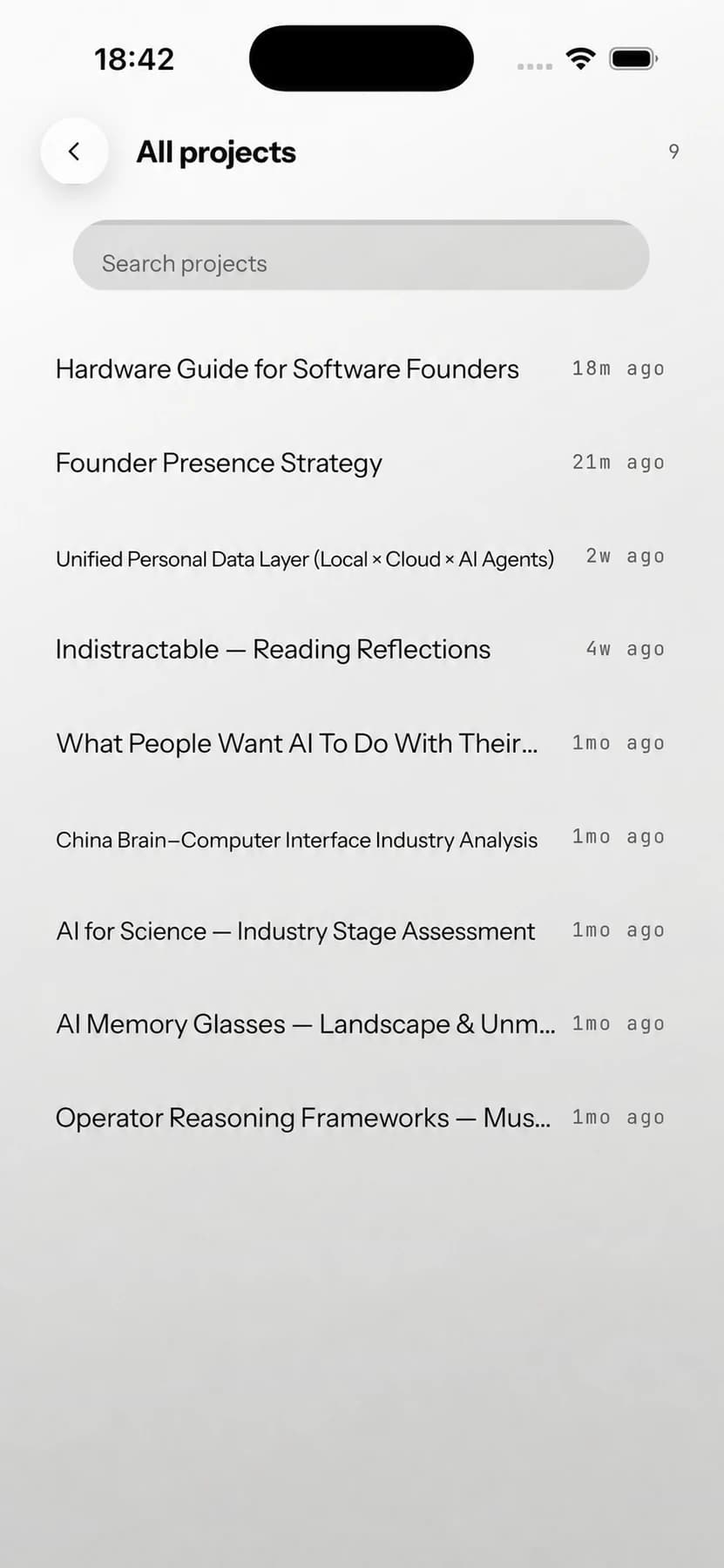
01 / MapLocalized composition
See the work already in motion.
Projects remain separate and visible before Tessera narrows the view to one changing workstream.
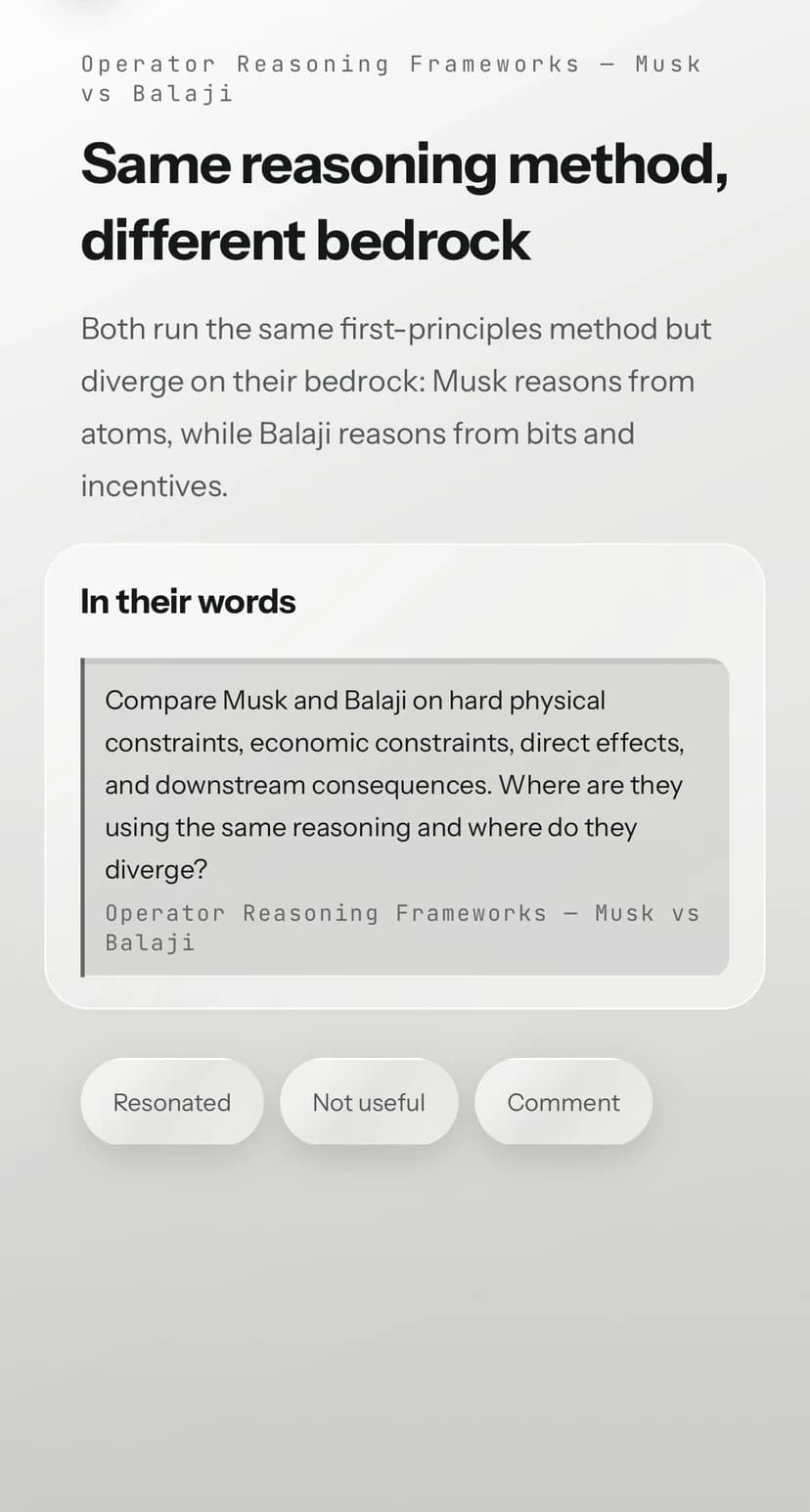
02 / NoticeObserved beta capture
Review what Tessera surfaced.
A Header Card turns an observation into an explicit judgment: resonate, reject, or comment.
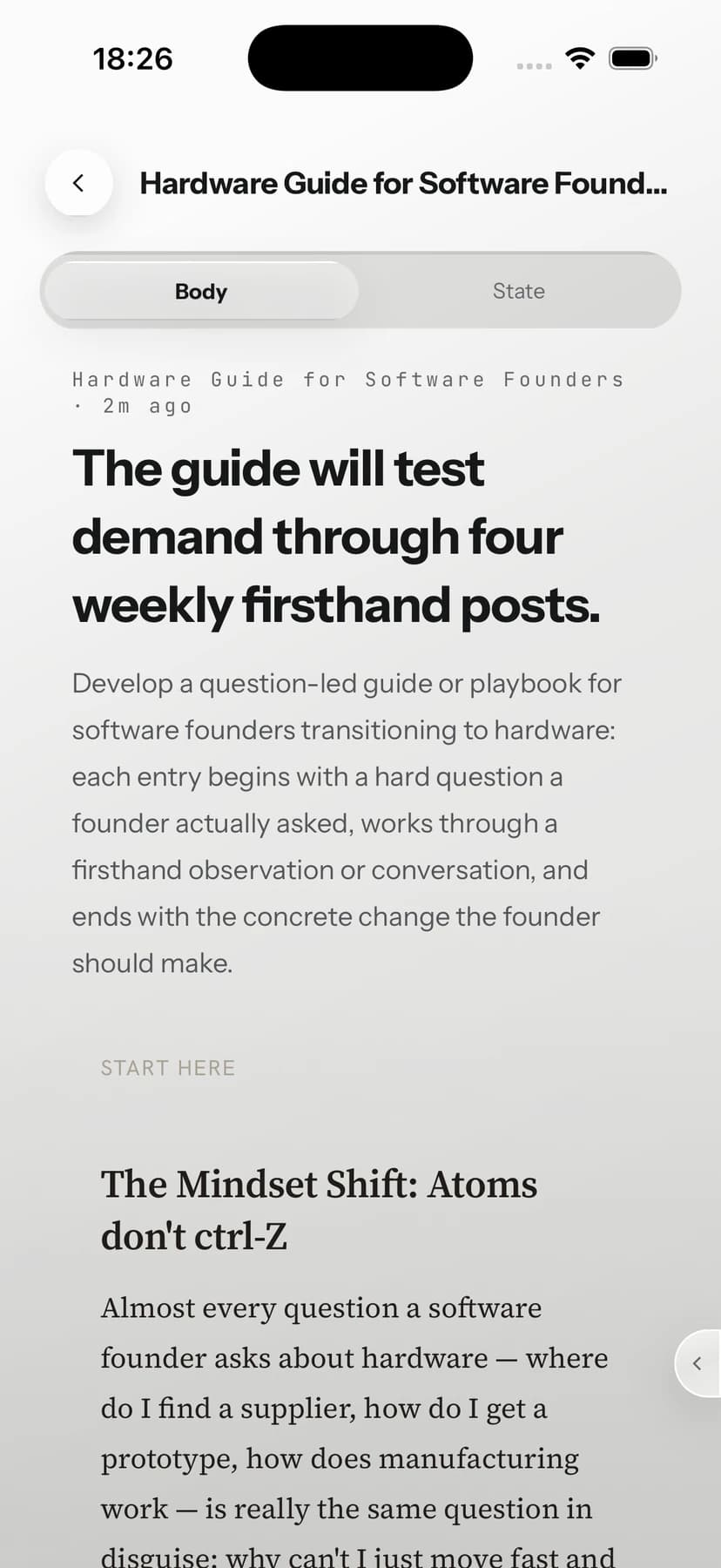
03 / ThesisObserved beta capture
Read the working direction.
The Folio opens with the current conclusion, goal, audience, and the reasoning behind the work.
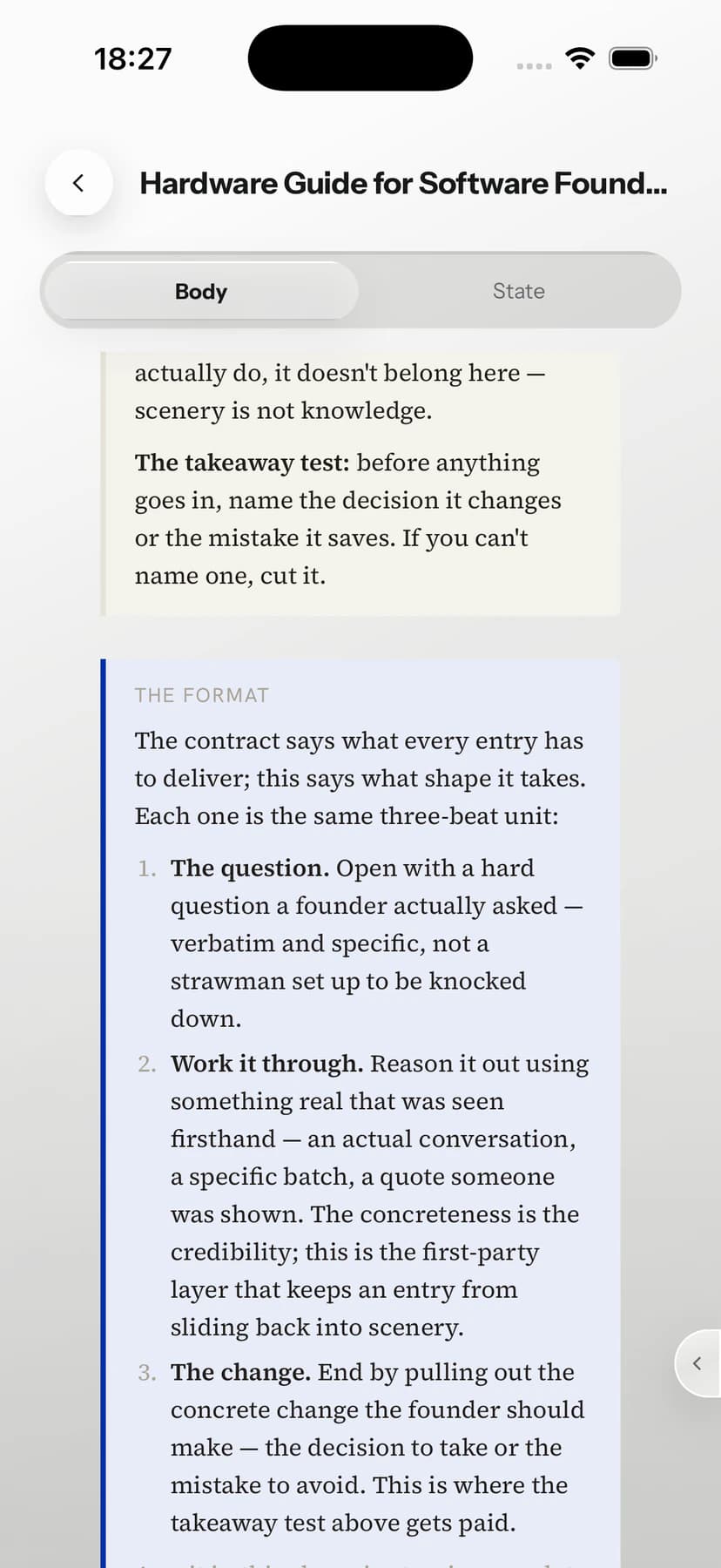
04 / StructureObserved beta capture
See the format that emerged.
Short conversational inputs become a usefulness standard and a repeatable editorial format.
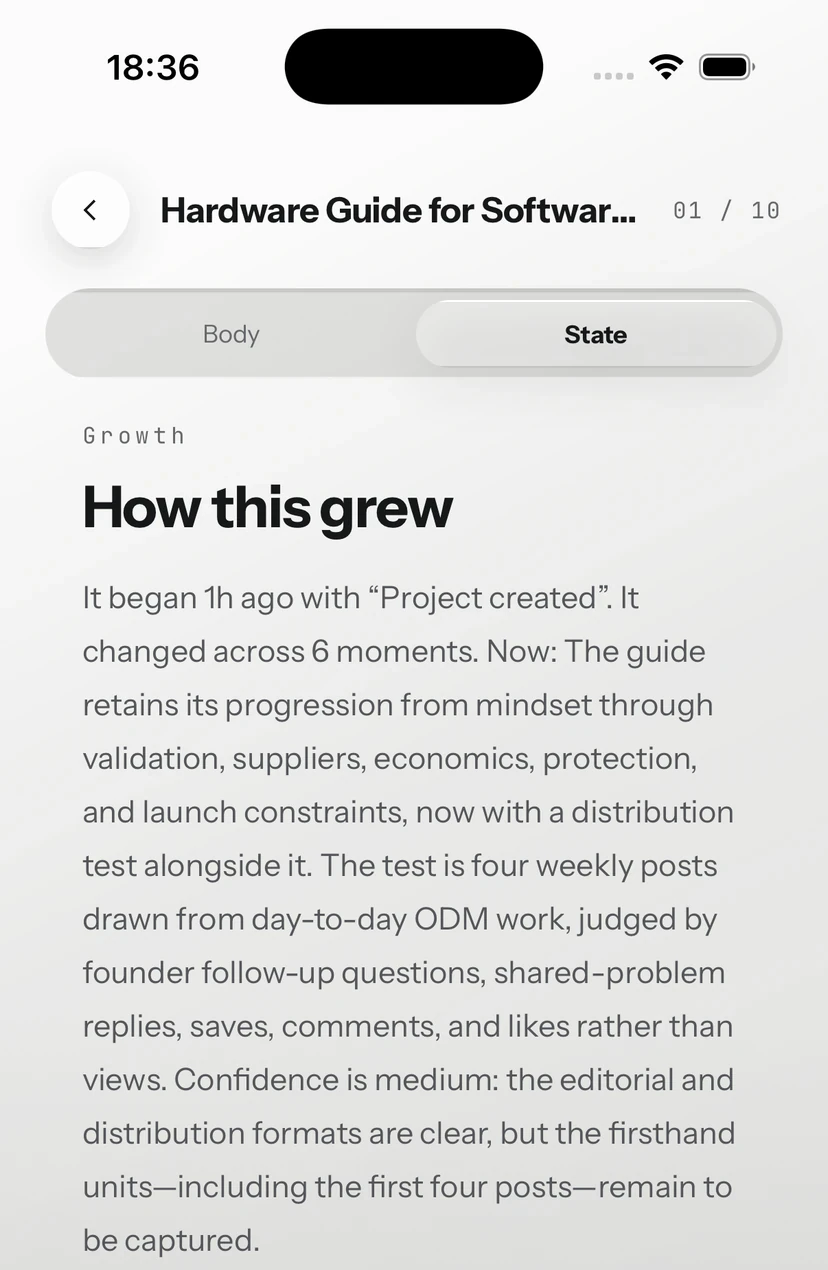
05 / GrowthObserved beta capture
Inspect how the Folio changed.
State records the moments that moved the work and the current bounded experiment.
Three moves inside the beta.
The beta is testing this sequence. These images document visible interface state, not a guaranteed user outcome.
Use voice or text.
Capture unfinished intent and attach source material when it matters.
Check where it belongs.
Inspect what Tessera understood and correct the workstream association.
Return to the Folio.
Continue from the evolving reader-first memo.
One loop, different surfaces
Mobile is the test surface. Sol and Desktop are planned extensions.
The surface is not the strategy. The shared Folio-centered loop is the strategy.
SolConcept
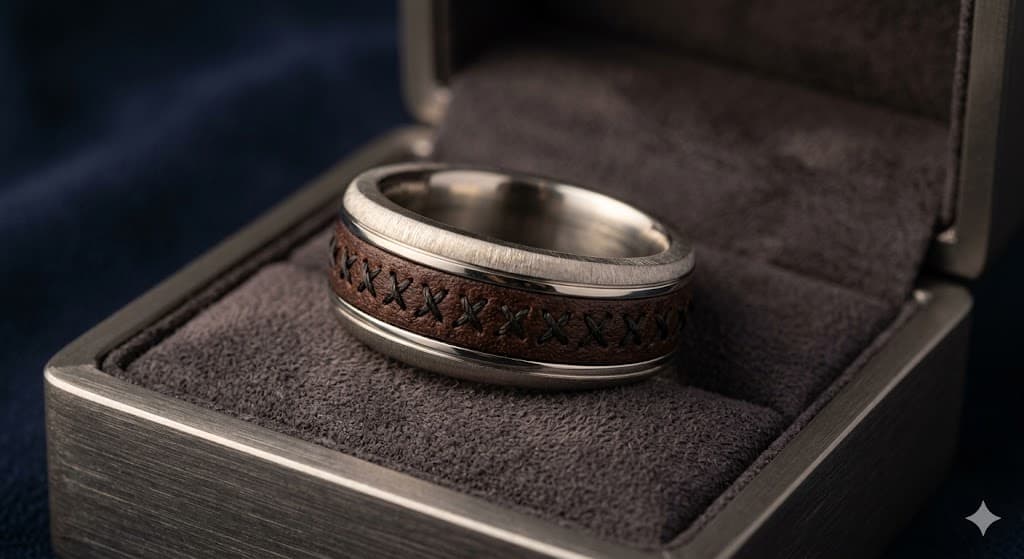
Explicit voice capture away from the desk.
Sol is Tessera's intended first product wedge, designed as a deliberate capture surface.
Industrial-design direction — not a functional prototypeDesktopFuture direction
Selected, permissioned context
Active workstream
Human attention
Context and attention at the desk.
Desktop is planned as a permissioned context and attention surface. No application concept is implied here.
Trust by design
Deliberate capture. Selective context. Visible correction.
Tessera is designed around explicit capture and permissioned, selective context, not exhaustive recording.
Capture begins with the person.
The product direction favors explicit input over an always-on surveillance model.
Context should be chosen for the work.
Planned surfaces are framed around permissioned, relevant context.
The route should remain inspectable.
The mobile control is designed to let people inspect and correct where an input belongs.
Beta control under validationFollow Tessera
Join the Tessera waitlistJoin the company waitlist.
For people who want to follow the product family as it develops.
Bring real work
Apply with one active workstreamApply to the mobile beta.
The mobile beta is high-touch and limited to 50 seats. Applying is not acceptance, but we'd love for you to give us a chance!